
A National Survey Reveals Sobering Rates of Physical/Sexual Violence During Psychedelic Use
Psychedelics hold tremendous promise in helping people get ‘unstuck’ from painful thought patterns, catalyzing change, and facilitating healing. While the altered states that psychedelics produce can be profoundly transformative, they can also be profoundly vulnerable. This vulnerability can be exploited, as evidenced by recent instances and allegations of sexual abuse within psychedelic-assisted therapy.
However, most psychedelic use doesn’t happen in research trials or the therapy room. Instead, it happens in peoples’ daily lives: at home, with friends, on hikes, or at concerts or festivals. Yet, risks of psychedelics in these common contexts remain virtually unexplored--until recently.
To address this critical knowledge gap, researchers at the Portland Institute of Psychedelic Science, Christina Chwyl, Ph.D. and Jason Luoma, Ph.D., partnered with colleagues at Rocky Mountain Poison & Drug Safety to analyze data from their large survey of psychedelic use patterns, risks and benefits. The findings are now published in World Psychiatry.
Most surveys enroll ‘WEIRD’ (Western, Educated, Industrialized, Rich, and Democratic) participants.
And many psychedelic surveys disproportionately enroll ‘psychedelic enthusiasts’, which means they may paint a rosy picture. However, the National Survey Investigating Hallucinogenic Trends (NSIHT) study enrolled a nationally representative sample of adults from the United States, including ~2,000 people who reporting using psychedelics in the past year.
What the Numbers Show
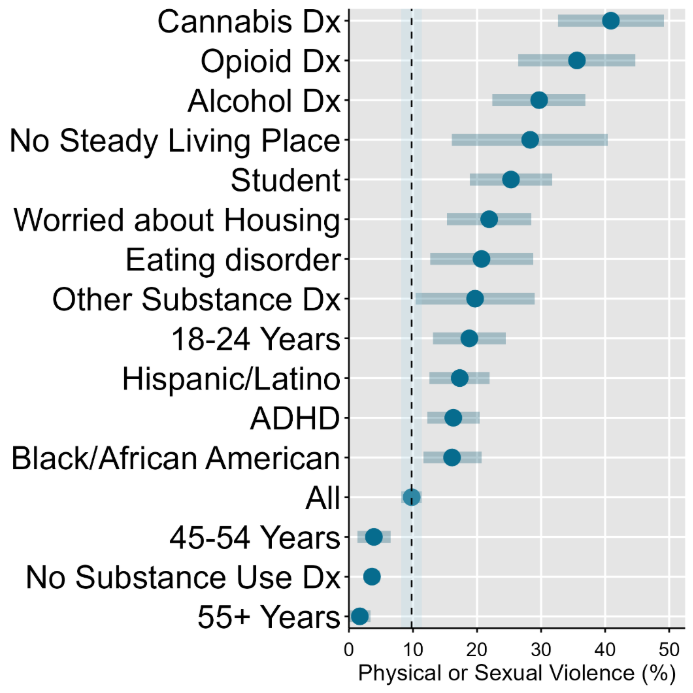
During past-year psychedelic use, 10% reported experiencing either physical or sexual violence. That’s 1 in 10 people, not accounting for the 5–6% who preferred not to answer the question. 7.5% of participants reported physical harm, including beating, choking, hitting, kicking, among others, and 7.2% reported forced sexual advances or acts, such as kissing, touching, fondling, groping, grabbing or touching.
Risks of violence were greater for certain groups, especially people with substance use disorder histories. Other high-risk groups included those with housing instability, students and young adults, people with eating disorder or ADHD histories, and Hispanic individuals. In many ways, these patterns mirror known risk factors of physical or sexual violence in non-psychedelic contexts.
Rates of Physical or Sexual Violence During Past-Year Psychedelic Use by Group
It’s tough to know how best to interpret these numbers. Do they speak to the high rates of violence experienced more generally in society (see the 2024 MeToo report)? Does being under the influence of psychedelics create a risky window, in which the odds of being harmed are greater? Why are some groups at greater risk than others?
Regardless of how we make sense of this data, the numbers are sobering. Violence prevention, harm reduction, and support resources tailored to the psychedelic context are needed, especially for communities at heightened risks of experiencing violence.
A Final Message
To those considering psychedelic use: Keep safety strategies top of mind when planning your psychedelic experience (see resources below). Vet as best you can the people around during psychedelic use or have a safe person there to have your back.
To those harmed during psychedelic use: Support is available (see resources below). Please remember that you are not alone, broken, or to blame. The shame of violence rests squarely on the perpetrator. You are whole, deserve healing, and are capable of it.
Author: Christina Chwyl, PhD
To read the full World Psychiatry article, click here.
Resources
Crisis Resources
National Sexual Assault Hotline: 1-800-656-4673
National Domestic Violence Hotline: 1-800-877-7233
National Suicide & Crisis Lifeline: 988-Lifeline
Substance Use National Helpline: 1-800-662-4357
Affordable Mental Health Resources
Free mental health support groups through the National Alliance on Mental Health and Anxiety & Depression Association of America
Search for low-cost health services through the National Association of Free & Charitable Clinics
Comprehensive guide on finding affordable therapy
Mental Health Treatment-Finding Resources:
Insurance provider: Call the number on the back of your insurance card for a list of covered (‘in-network’) mental health options. This resource outlines key insurance terms.
Therapist directories allow you to search for a provider by different criteria (e.g., location, specialty, insurance/payment, language):
Behavioral Health Services Locator: search for substance use resources by location and type of facility, or call for 24/7 assistance:1-800-662-4357.
Psychedelic Support Resources:
Fireside’s psychedelic support line: 623-473-7433
Fireside’s TripCheck for psychedelic planning: 623-473-7533
Education resources for psilocybin (magic mushrooms) and LSD from TripSafe.org
Guide to coping with psychedelic difficulties from the Challenging Experiences Project
Psychedelic Journey Companion Guide and other resources through the Zendo Project
DanceSafe substance testing kits
Disclaimer: manufacturing, possessing or supplying psychedelics is a criminal offense in most countries, outside of approved research and certain state-regulated programs. This article is not intended to encourage any illegal activities.