

New Study Explores What Psilocybin Safety Strategies Oregonians Use—and What’s Missing
New research shows the strategies that Oregonians use to stay safe during psilocybin use, and the resources that they’re missing.
Our team at PIPS, in partnership with our collaborators at the Oregon Health & Science University, systematically gathered the first-hand experiences of 31 Oregon residents who plan to or have used psilocybin. This study, published in the scientific journal Psychedelics, is the first qualitative study of psilocybin safety in the era of Oregon’s state-regulated psilocybin services.
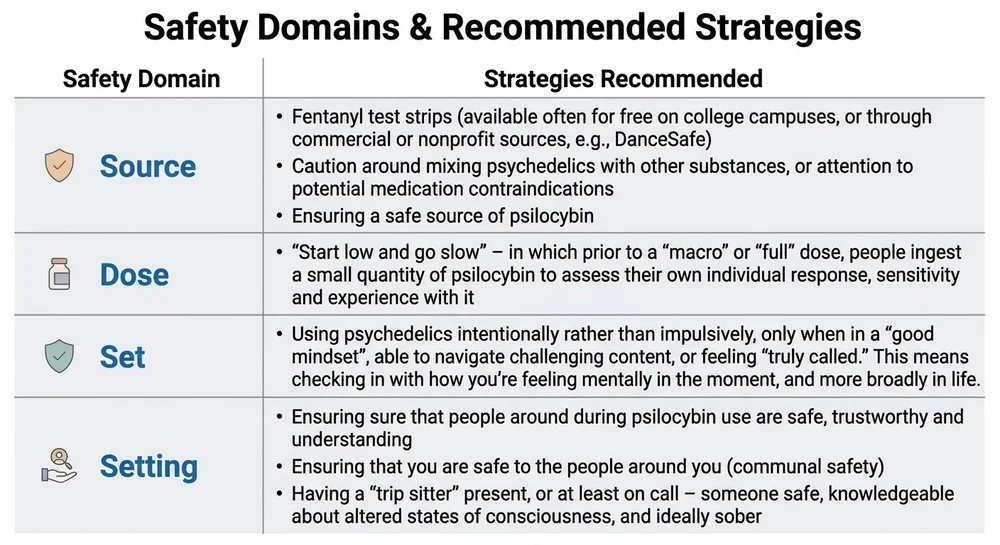
Some results were promising, suggesting a general awareness of certain ‘foundational’ harm reduction strategies. These include carefully attending to dose and source, ‘set’ (mental state at the time of psychedelic use), and ‘setting’ (physical environment):
Participants were generally unaware of certain psilocybin resources, such as:
- Kits for testing potency (e.g., Miraculix)
- Community organizations and resources, such as peer support groups and publicly available guides for navigating post-psychedelic difficulties (such as through the Challenging Experiences Project, Zendo Project, Psychedelic Safety Institute, and the Fireside Project)
- Licensed service centers
Many participants wanted to discuss psilocybin use with a knowledgeable and trustworthy medical provider. While some reported prior positive experiences, others shared negative experiences, or barriers to open patient-provider communication, including legal concerns, fear of stigma, and lack of provider knowledge.
Overall, our findings paint a snapshot of what psilocybin safety strategies Oregon residents use, and which they aren’t aware of. Several important safety education gaps need to be addressed, including more accessible resources (testing kits, trustworthy educational sources, community supports), and healthcare provider training around psilocybin.
You can read the full study in Psychedelics: Safety in an evolving psychedelic landscape: Knowledge and use of psilocybin safety strategies, resources, and support in a naturalistic Oregon sample.
Author: Christina Chwyl, PhD
This article is for educational purposes and does not constitute medical advice or a recommendation to use psychedelic substances. Psychedelic-assisted therapy is currently available primarily through approved clinical trials and regulated programs such as Oregon’s psilocybin services.